
The Celery Salad That Actually Keeps Its Crunch

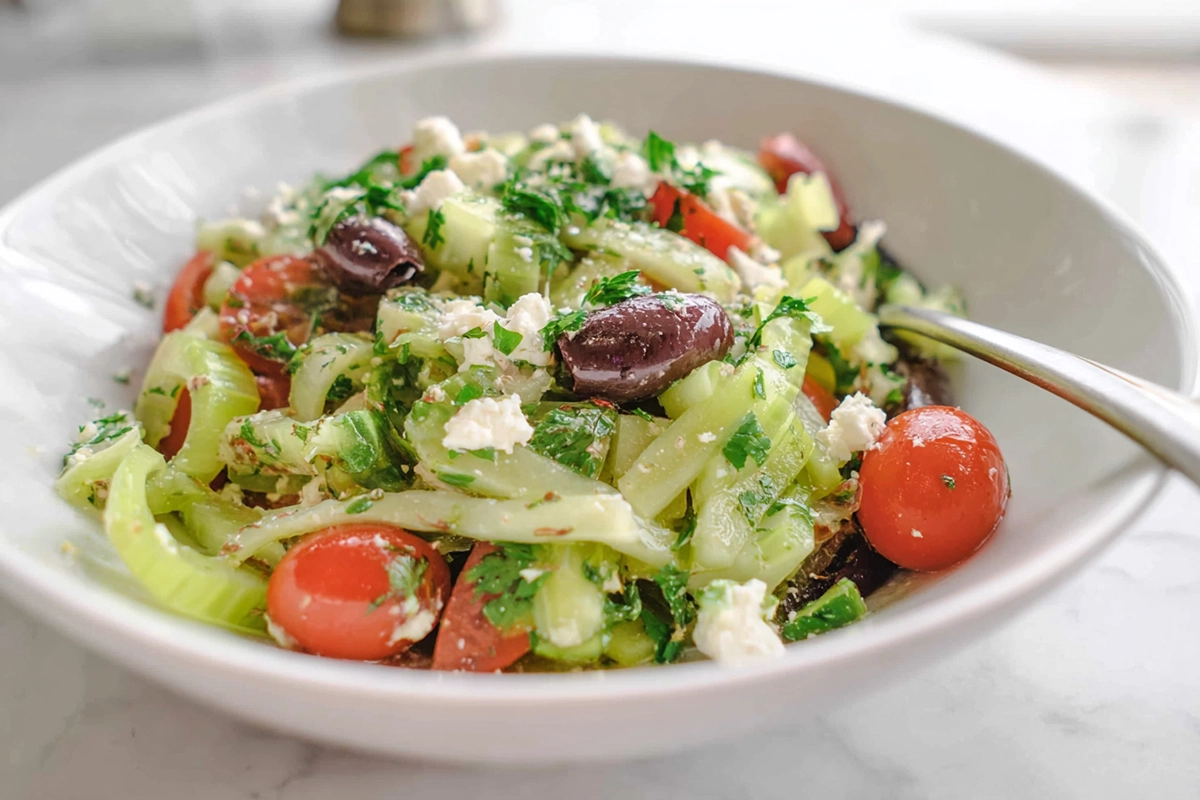
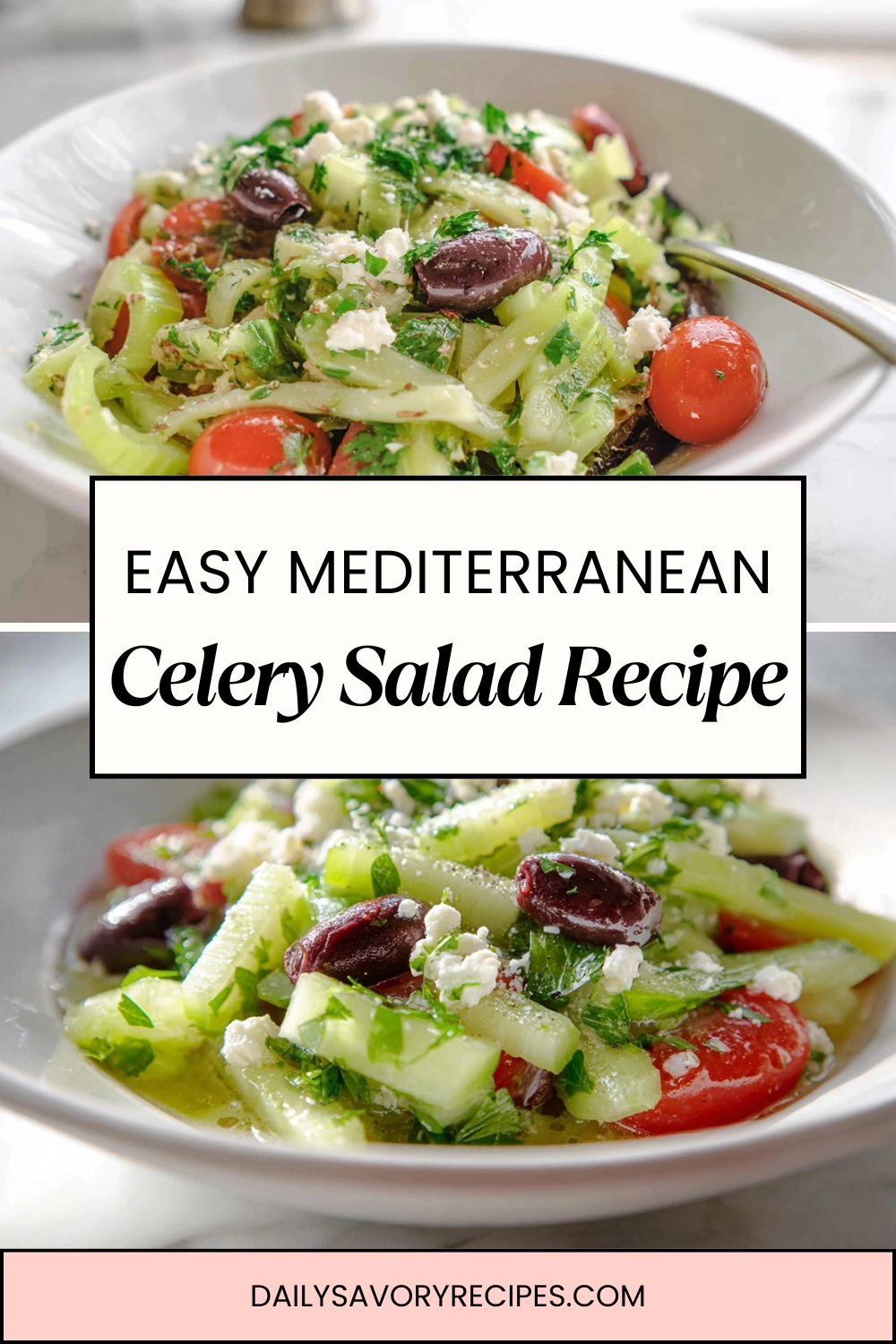
Celery Salad is one of those dishes that sounds boring on paper but surprises you the second you take a bite. Cold, crisp celery snaps back at your teeth, the lemon hits your nose before it hits your tongue, and then the olives come in with that salty, savory depth that makes you reach for another forkful without thinking. This isn’t a “leafy greens pretending to be lunch” situation. It’s sharp, refreshing, and weirdly satisfying—especially when you’re meal prepping and want something that still feels alive by day three.
Most celery salad recipes fall into two camps, and both miss the mark. The first drowns everything in dressing until the celery turns limp and sad. The second treats celery like an afterthought—thick chunks, no balance, no reason to care. You end up with a bowl that’s either watery or aggressively bland, and neither one survives the fridge overnight.
Here’s my promise to you: this version works because it respects the celery. The slices are thin on purpose. The dressing is bold but controlled. Every ingredient has a job, and none of them are there just to look pretty. This is a Healthy Meal Prep salad that actually holds up, refreshes well, and doesn’t make you regret packing it for lunch. No gimmicks, no “superfood” nonsense—just a Mediterranean-style celery salad that stays crunchy, tastes bright, and earns its spot in your weekly rotation.
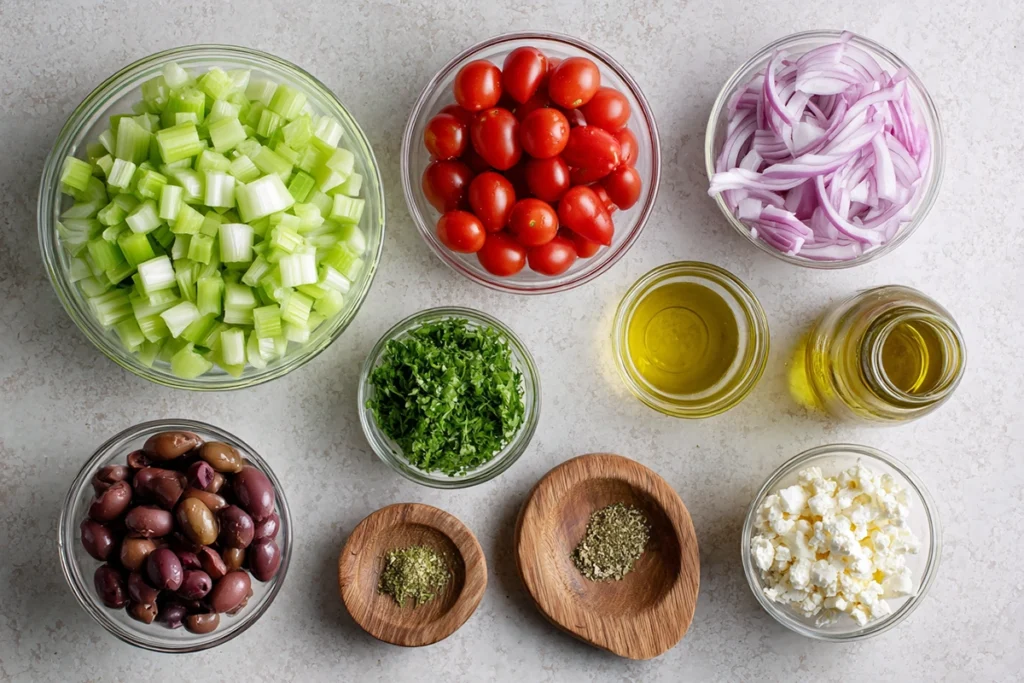
The No-Regret Ingredients
Celery
This is the backbone, so don’t grab the floppy bunch in the back of the bin. I look for firm, pale-green stalks with leaves still attached—those leaves add a subtle bitterness that balances the lemon later. If the celery bends easily, put it back.
Cherry Tomatoes
Cherry tomatoes bring juiciness without flooding the bowl. I avoid large tomatoes here because they release too much liquid and soften the celery. Basic grocery-store cherry tomatoes are fine; just make sure they smell like tomatoes, not cardboard.
Fresh Parsley and Basil
These two do different jobs. Parsley keeps things clean and grassy, while basil adds a soft, sweet aroma that rounds out the sharp edges. Dried herbs won’t work here—this salad lives and dies by freshness.
Red Onion
Thin slices only. Red onion adds bite and color, but too much or too thick, and it bulldozes everything else. If your onion is extra harsh, a quick rinse under cold water tames it without killing the flavor.
Kalamata Olives
Do not substitute bland black olives. Kalamatas are meaty, salty, and slightly fruity, which is exactly what this salad needs. Jarred is fine—I use them all the time—but they should be real Kalamatas, not “olive mix” filler.
Feta Cheese
Feta adds creaminess and salt in small doses. I prefer block feta in brine because it crumbles more cleanly and tastes sharper. Pre-crumbled works in a pinch, but it’s usually drier and less flavorful.
Extra-Virgin Olive Oil
This is where quality actually matters. A decent, mid-range extra-virgin olive oil gives body and a subtle peppery finish. Cheap, flavorless oil makes the dressing feel flat and greasy.
Fresh Lemon Juice and Zest
Fresh only. Bottled lemon juice tastes dull and metallic. The zest is just as important as the juice—it brings aroma without extra acidity, which keeps the salad bright instead of sour.
Dijon Mustard
Regular Dijon is perfect here. You’re not looking for heat or sweetness, just enough sharpness to help the dressing emulsify and cling to the celery.
Dried Oregano
A small amount adds that unmistakable Mediterranean backbone. Fresh oregano is too aggressive for this salad; dried is actually the better choice.
Garlic
One small clove, finely grated. Garlic should whisper, not shout. If you can taste raw garlic first, you’ve gone too far.
The Process: How I Keep It Crisp, Not Watery
Start With Cold, Dry Vegetables
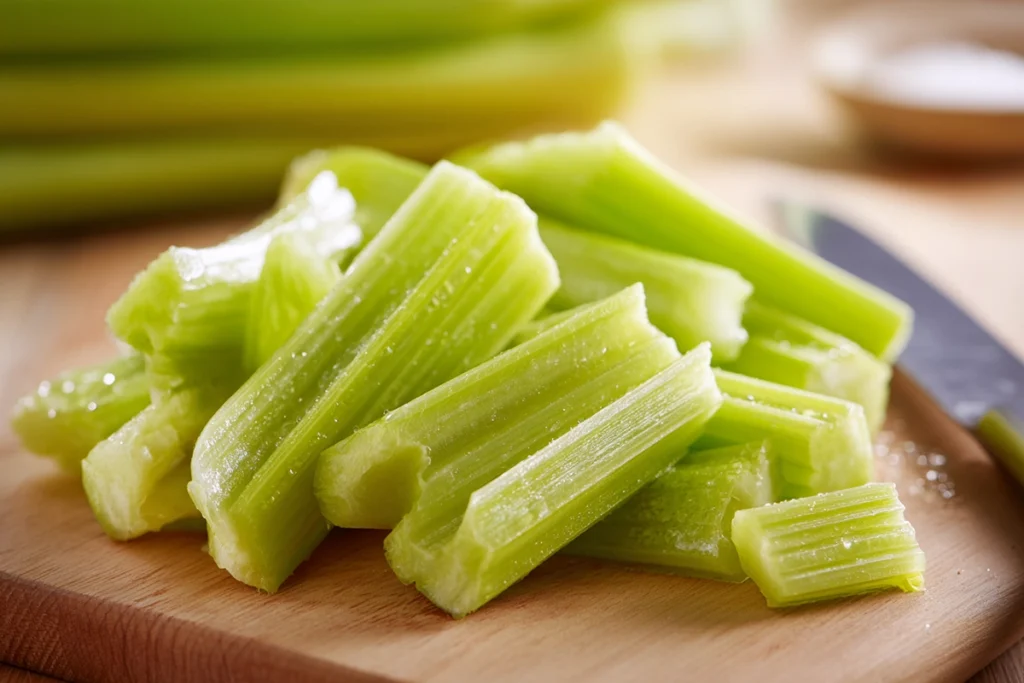
I always begin with celery that’s been rinsed in cold water and dried thoroughly. When you run your fingers over the stalks, they should feel dry and slightly squeaky, not slick. If there’s water clinging to the surface, you’re setting yourself up for a diluted dressing later. The smell at this stage should be clean and green—if the celery smells musty, it’s already past its prime.
As I slice, I watch the cross-sections closely. Thin, diagonal cuts should look almost translucent at the edges. When you pick one up, it should bend just slightly before snapping. That snap is the sound you’re chasing—it’s the difference between a salad that refreshes and one that feels tired.
Build the Bowl Before the Dressing
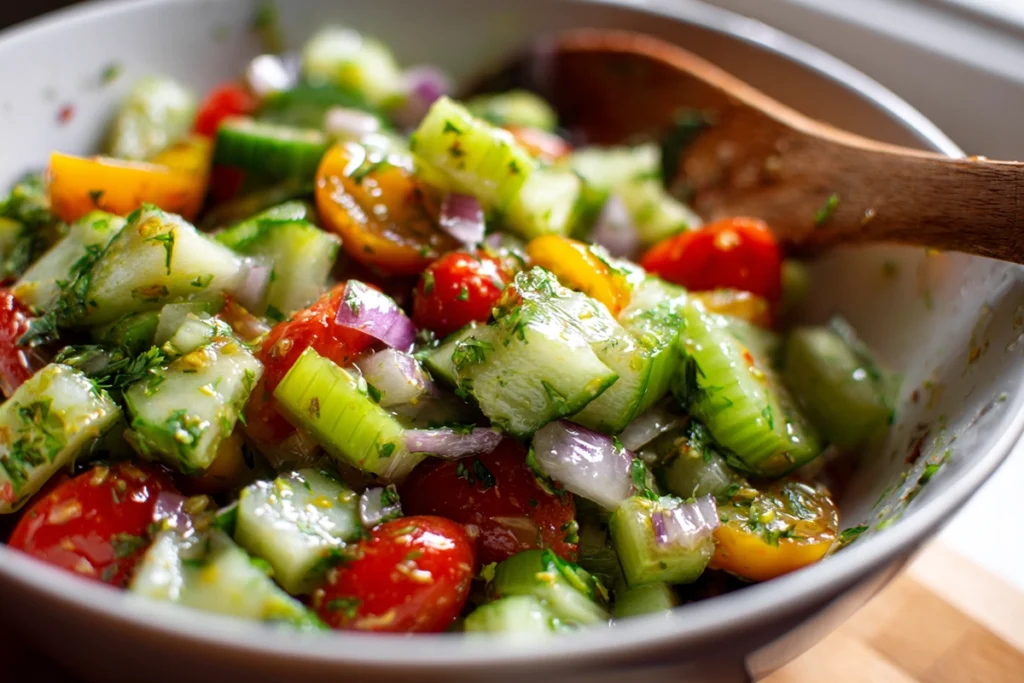
All the vegetables go into the bowl first. When you toss them gently with your hands, you should hear a soft rustling sound, not a wet slap. The tomatoes should look glossy but not leaking, the herbs fluffy and fragrant. If you lean in, the smell should be fresh and herbal, with the celery still leading the conversation.
This step matters because it lets you see the balance before liquid enters the picture. Visually, you want even distribution—no clumps of onion, no pockets of herbs. Touch-wise, everything should feel light and separate, not weighed down.
The Dressing Should Cling, Not Pool
When I whisk or shake the dressing, I’m looking for a smooth, lightly thickened texture. It should look unified, not separated, and when you drag a spoon through it, the trail should slowly close behind. The smell here is sharp lemon first, then olive oil, with garlic hanging quietly in the background.
When the dressing hits the salad, listen closely. You want a soft, whispery sound as it coats the vegetables—not a splash. Toss gently. The celery should shine, not swim. If you see liquid collecting at the bottom of the bowl, you’ve gone too far.
The Uh-Oh Moments (I’ve Been There)
Why Does My Celery Salad Turn Watery?
I learned this the hard way after packing lunch too early. The culprit is almost always moisture—either from wet celery or dressing added too far ahead. If the salad looks glossy at first but turns dull and puddled later, that’s water leaking out. Dry the vegetables better and dress closer to eating.
Why Did My Salad Lose Its Crunch?
This happens when the celery is sliced too thick or tossed too aggressively. Thick slices feel bulky in the mouth and soften unevenly. If the salad sounds quiet when you toss it instead of lightly crackly, the structure is already gone. Thin slices and a gentle hand fix this.
Why Does the Dressing Taste Flat?
Nine times out of ten, it’s the olive oil or lemon. Cheap oil smells neutral and leaves a greasy feel on your lips instead of a clean finish. Bottled lemon juice smells dull and slightly metallic. If the dressing doesn’t smell bright before it hits the salad, it won’t magically improve later.
Why Is the Garlic Too Strong?
Raw garlic can take over fast. If you smell garlic before lemon when the dressing is mixed, it’s already too much. I’ve ruined a bowl this way before. One small clove, finely grated, should add warmth—not burn your nose.
Make It Your Own
Protein-Forward Meal Prep
If I’m turning this into a full lunch, grilled chicken is my first choice—but it has to be fully cooled before it goes anywhere near the salad. Warm protein wilts the celery on contact, and you can hear the crunch disappear as it steams. Chickpeas also work if they’re well-drained and lightly crushed with your fingers; that rough surface grabs the dressing without weighing things down.
Dairy-Free, Still Satisfying
Skipping feta doesn’t mean skipping flavor. I increase the chopped Kalamata olives slightly and add a tiny splash of their brine. You should smell that salty, briny note as soon as you toss—if it smells flat, you didn’t add enough. The texture stays lighter, and the celery actually feels sharper and cleaner on the tongue.
A Little Heat, Not a Punch
When I want heat, I reach for red pepper flakes, not fresh chilies. Fresh peppers smell aggressive and hijack the salad. A pinch of flakes adds warmth you feel in the back of your throat without burning your nose, and it fades quickly enough to keep the celery front and center.
Serving & Storing (Real Life)
I eat this Celery Salad straight from the fridge as a light lunch or alongside grilled fish when I want something crisp to cut through the richness. It’s best cold—the crunch is louder, the lemon sharper, and the herbs more aromatic. If I’m serving it for dinner, I dress it at the last minute and toss it once, just until everything glistens.
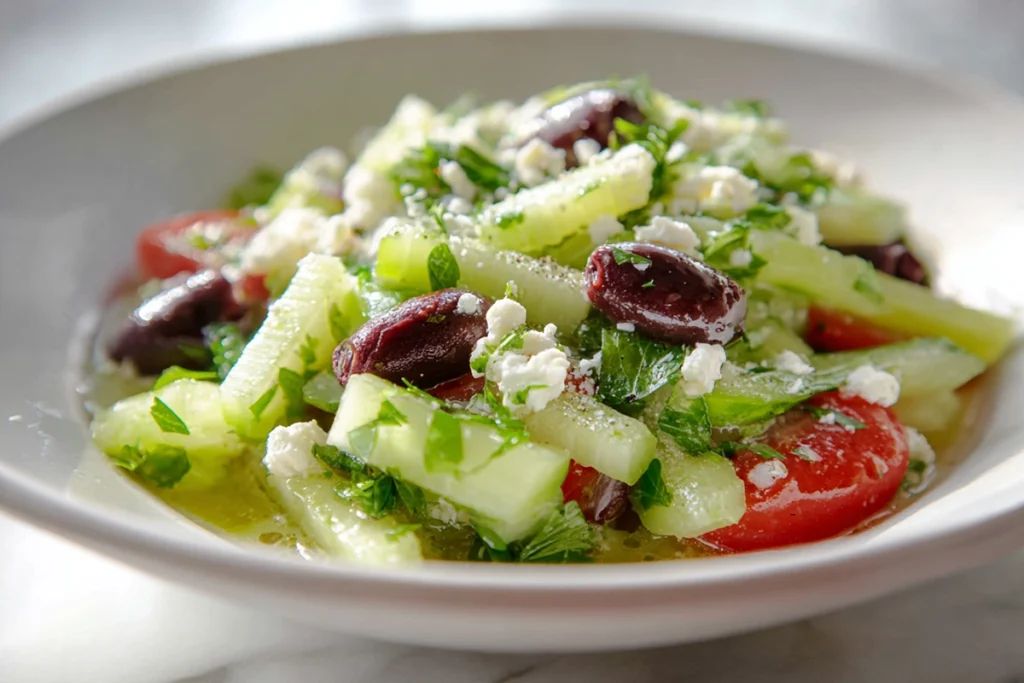
For meal prep, I store the vegetables and dressing separately. The vegetables go into an airtight container lined with a paper towel to absorb stray moisture. The dressing lives in a small jar. Combined, the salad is best within a few hours; separated, it easily lasts two to three days. If it dulls slightly, a squeeze of lemon and a quick toss bring the smell and texture back to life.
Closing
This Celery Salad works because it stays honest—cold, crunchy, and bright from the first bite to the last. When meal prep needs to feel fresh instead of forced, this is the bowl I reach for every time.
Get inspired with more mouthwatering recipes! Follow me on Pinterest for new cooking ideas every week.
Frequently Asked Questions
Can I make celery salad ahead for meal prep?
Yes, but keep the vegetables and dressing separate. Tossing everything together too early softens the celery and dulls the flavor. Stored separately, it stays fresh for up to three days.
How thin should celery be sliced for salad?
Thin enough that the edges look slightly translucent. When you bite into it, it should snap easily, not feel bulky or stringy. Thick slices are the fastest way to lose that crisp texture.
Is celery salad supposed to taste bitter?
A little bitterness is normal, especially from the celery leaves—that’s actually part of the balance. If it tastes unpleasantly bitter, the celery was likely old, or the slices were too thick.
What proteins pair best with celery salad?
Grilled chicken, canned tuna, or chickpeas work best. Just make sure any protein is fully cooled before adding it, or the heat will wilt the celery instantly.
Can I skip the feta cheese?
Yes. If you skip feta, increase the Kalamata olives slightly or add a teaspoon of olive brine. You need that salty depth to keep the salad from tasting flat.
Why does my celery salad turn watery?
Either the celery wasn’t dried well enough, or the salad was dressed too far in advance. Moisture is the enemy here. Dry vegetables and last-minute dressing fix the problem.
Is celery salad filling enough for lunch?
On its own, it’s light but refreshing. Add a protein or serve it alongside bread or grilled fish, and it becomes a satisfying, balanced meal.
Celery Salad
Ingredients
Method
- Rinse all vegetables under cold water and dry thoroughly using a salad spinner or clean towels.
- Thinly slice the celery on a diagonal, chop the herbs and celery leaves, slice the red onion, and halve the cherry tomatoes.
- Add the celery, tomatoes, herbs, celery leaves, and red onion to a large mixing bowl and toss gently.
- In a small jar or bowl, combine olive oil, lemon juice, lemon zest, Dijon mustard, oregano, chopped olives, feta, and grated garlic, then shake or whisk until emulsified.
- Pour the dressing over the salad and toss lightly until everything is evenly coated.
- Season with freshly ground black pepper and garnish with extra kalamata olives and feta if desired.
Notes
- Slice the celery thinly for the best texture and crunch.
- For best results, dress the salad shortly before serving.
- The salad can be refreshed with extra lemon juice if it sits too long.