Rinse the Japanese short-grain rice under cold running water until the water is nearly clear, then drain well.
Add the rinsed rice and 1 1/4 cups water to a rice cooker and cook according to the manufacturer’s instructions.
For the Instant Pot method, add the rice and water to the liner, secure the lid with the valve in the sealing position, cook on high pressure for 6 minutes, and allow a 10-minute natural pressure release.
While the rice cooks, stir together 2 tablespoons soy sauce, honey, rice vinegar, sesame oil, garlic powder, and ground ginger in a small bowl.
Heat about 1 tablespoon avocado oil in a skillet over medium-high heat until shimmering.
Place the salmon skin-side down in the skillet, sprinkle the top with salt, and cook without moving for 4 minutes.
Flip the salmon, reduce the heat to medium, and cook for another 3 to 5 minutes, until the flesh is opaque and flakes easily with a fork.
Transfer the salmon to a bowl, discard the skin, and flake the flesh with a fork.
Stir the prepared soy-ginger sauce into the salmon, leaving behind any excess liquid that pools in the bowl.
When the rice is cooked, add 2 1/2 tablespoons soy sauce and fold gently with a rice paddle until the color is uniform.
Let the rice cool until it is warm and comfortable to handle, but do not allow it to cool completely.
To shape by hand, dampen your hands, flatten about 1/2 cup seasoned rice into a thick circle, place 1 tablespoon salmon filling in the center, and enclose the filling completely.
Press the filled rice firmly into a compact, flattened triangle about 1 inch thick, patching any cracks with a little additional warm rice.
To use an onigiri mold, wet the inside, add 1/4 cup rice, place 1 tablespoon filling in the center, cover with another 1/4 cup rice, press firmly, and release.
Place the shaped onigiri on parchment paper or a wooden cutting board and dust the front and back lightly and evenly with potato starch.
Heat the remaining avocado oil in a wide skillet over medium-low heat and arrange the onigiri in a single layer without touching.
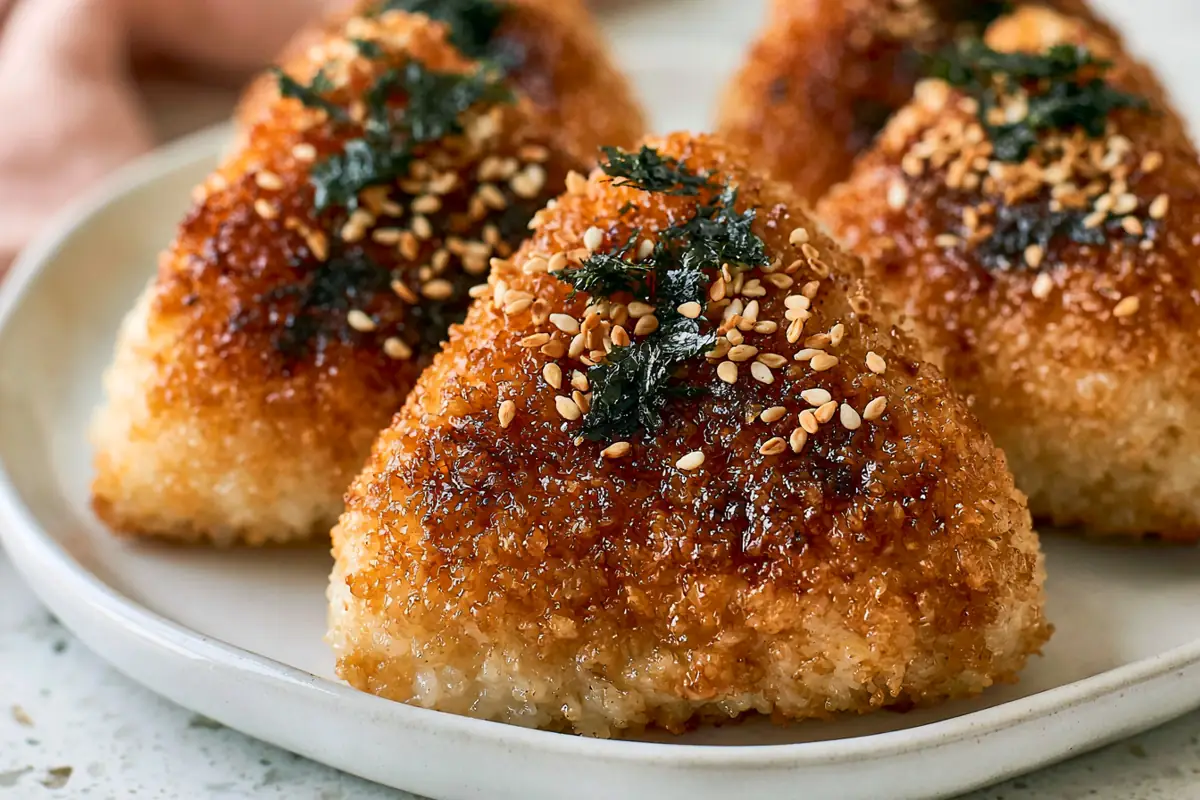
Cook the first side undisturbed for 6 to 8 minutes, until a firm golden crust forms and the rice releases cleanly from the skillet.
Flip each onigiri carefully with a thin wide spatula and cook the second side for another 6 to 8 minutes, adding more oil if the skillet becomes dry.
For additional browning, stand each triangle on its three narrow sides and cook for about 1 minute per side.
Serve the yaki onigiri warm on their own, wrapped with narrow strips of nori, or sprinkled lightly with furikake.