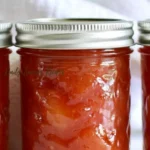
Nectarine Jam
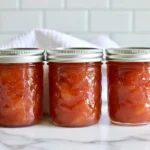
A simple homemade nectarine jam made without boxed pectin using ripe nectarines, lemon juice, and sugar. This preserve uses maceration and a proper set point for a bright fruit flavor and smooth jam texture.
- Prep Time: 4 hours 12 minutes
- Cook Time: 15 minutes
- Total Time: 4 hours 27 minutes
- Yield: 4 8-ounce jars 1x
- Category: Breakfast, Jam, Preserves
- Method: Boiling, Maceration, Water Bath Canning
- Cuisine: British / American
Ingredients
Scale
- 2 lbs fresh nectarines, chopped but not peeled
- 1/4 cup lemon juice
- 2 1/2 to 3 2/3 cups granulated sugar
- 4 tablespoons water, optional
Instructions
- Chop the nectarines into small pieces without peeling them.
- Toss the chopped nectarines with lemon juice, then stir in the sugar. The mixture will look thick and grainy at first.
- Cover and refrigerate for at least 4 hours, preferably overnight, so the nectarines release their juices.
- Transfer the macerated fruit mixture to a deep stock pot or Dutch oven, keeping the pot no more than half full to allow space for foaming.
- If canning, prepare a water bath canner, jars, and lids before cooking the jam.
- Place the pot over high heat and bring the mixture to a boil, stirring continuously.
- Cook on high heat, stirring constantly, until the jam reaches its set point. Use a chilled plate test or an instant-read thermometer.
- At sea level, jam generally sets at 220°F. Reduce that temperature by about 1°F for every 500 feet above sea level.
- Once the jam reaches set, remove it from the heat and ladle it into prepared jars, leaving 1/4 inch headspace.
- For shelf-stable storage, process the jars in a water bath canner for 10 minutes, or 15 minutes above 6,000 feet elevation.
- Remove jars to a towel-lined counter and let them cool undisturbed. Check seals after 24 hours.
- Store properly sealed jars in the pantry for 12 to 18 months. Refrigerate after opening.
- For refrigerator jam, store for 2 to 3 weeks. For freezer storage, use freezer-safe straight-sided jars and freeze for up to 6 months.
Notes
- Do not peel the nectarines; the skins soften during cooking and add color and body.
- The jam mixture may look dry before maceration, but the fruit will release juice as it rests.
- Use a deep pot because jam foams quickly once it reaches a hard boil.
- If using the freezer plate test, chill the plate before cooking starts.
- Sugar reductions can affect the set, texture, and storage quality of the jam.
- Use clean utensils when serving opened jam to help maintain quality.
Nutrition
- Serving Size: 1 tablespoon
- Calories: 50
- Sugar: 12
- Sodium: 0
- Fat: 0
- Saturated Fat: 0
- Unsaturated Fat: 0
- Trans Fat: 0
- Carbohydrates: 13
- Fiber: 0
- Protein: 0
- Cholesterol: 0
Find it online: https://www.dailysavoryrecipes.com/nectarine-jam-without-pectin/